Last Tuesday, the S&P 500 closed at 7818.93 points, setting a new closing record for the first time since August 13, with a weekly gain of 1.2%. On Wednesday, the 10-year U.S. Treasury auction had a yield of 5.30%, a new 24-year high.
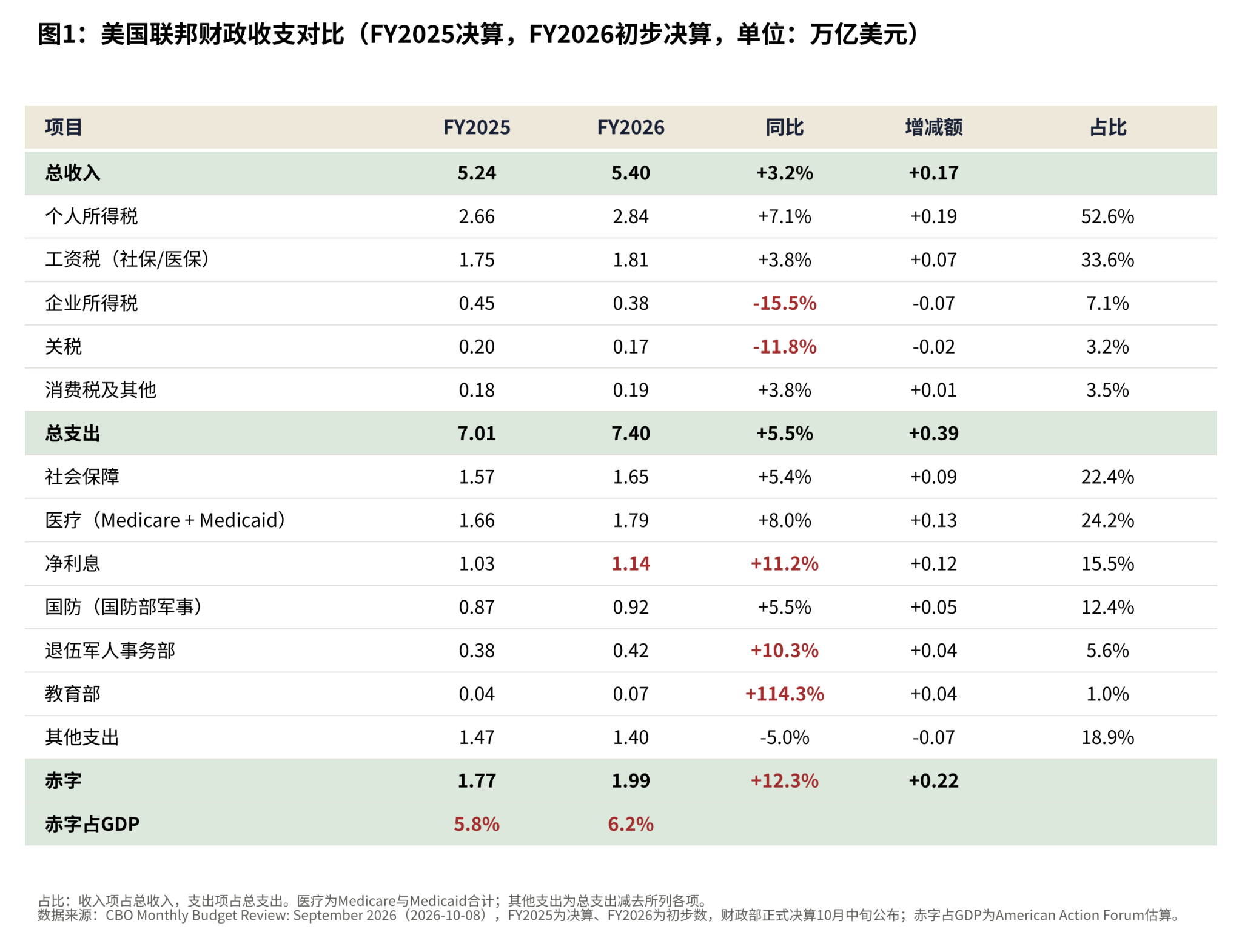
On Thursday, the Congressional Budget Office released the budget for fiscal year 2026: revenue of $5.40 trillion, expenditures of $7.40 trillion, and a deficit of $1.99 trillion; net interest of $1.14 trillion, which is $227 billion more than defense spending.
The deficit is 6.2% of GDP, the unemployment rate is 4.2%, there is no war at home, and there is no recession. Maya MacGuineas, head of the budget oversight organization, described this figure as: the highest in history, excluding war and recession. Thus, many headlines this week have been asking the same question: Can the U.S. government hold up?
Let’s lay out the budget, as the answer is hidden in two lines on the revenue side and two lines on the expenditure side.
Individual Taxation
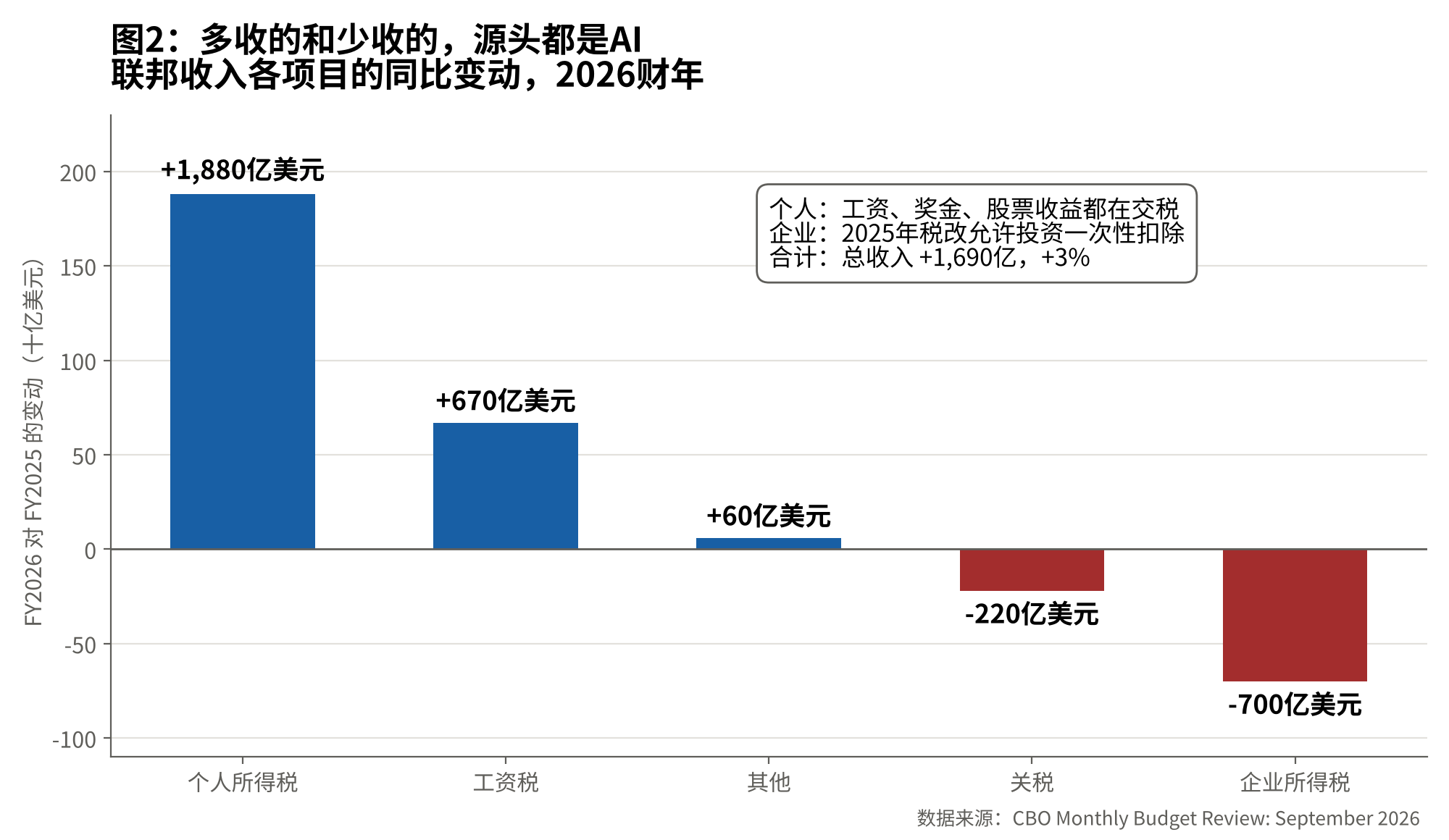
The largest line on the revenue side is individual income tax: rising from $2.66 trillion to $2.84 trillion, an increase of $188 billion, or 7%. Breaking it down, the withholding from wages increased by $168 billion, a 5% rise, which includes salaries and bonuses; the self-reported additional payments increased by $108 billion, a 9% rise, which includes capital gains from selling stocks and options. Payroll taxes also collected an additional $67 billion.
Wages, bonuses, and stock gains are all being taxed, and the wealth effect of AI has fallen onto individuals' tax bills. NVIDIA's market capitalization is approaching $6 trillion, and Micron has nearly tripled this year; employees' restricted stock is withheld at the time of vesting, and shareholders must prepay taxes when profits are realized. The treasury is one of the largest shareholders in this market rally.
Corporate Investment
The line that dropped the most on the revenue side is corporate income tax: falling from $452 billion to $382 billion, a decrease of $70 billion, or 16%. The CBO's explanation is succinct: corporate profits are rising, but the 2025 tax cut allows companies to deduct certain investments in one go. The law signed on July 4 last year has made the policy of 100% expensing for equipment investments permanent.
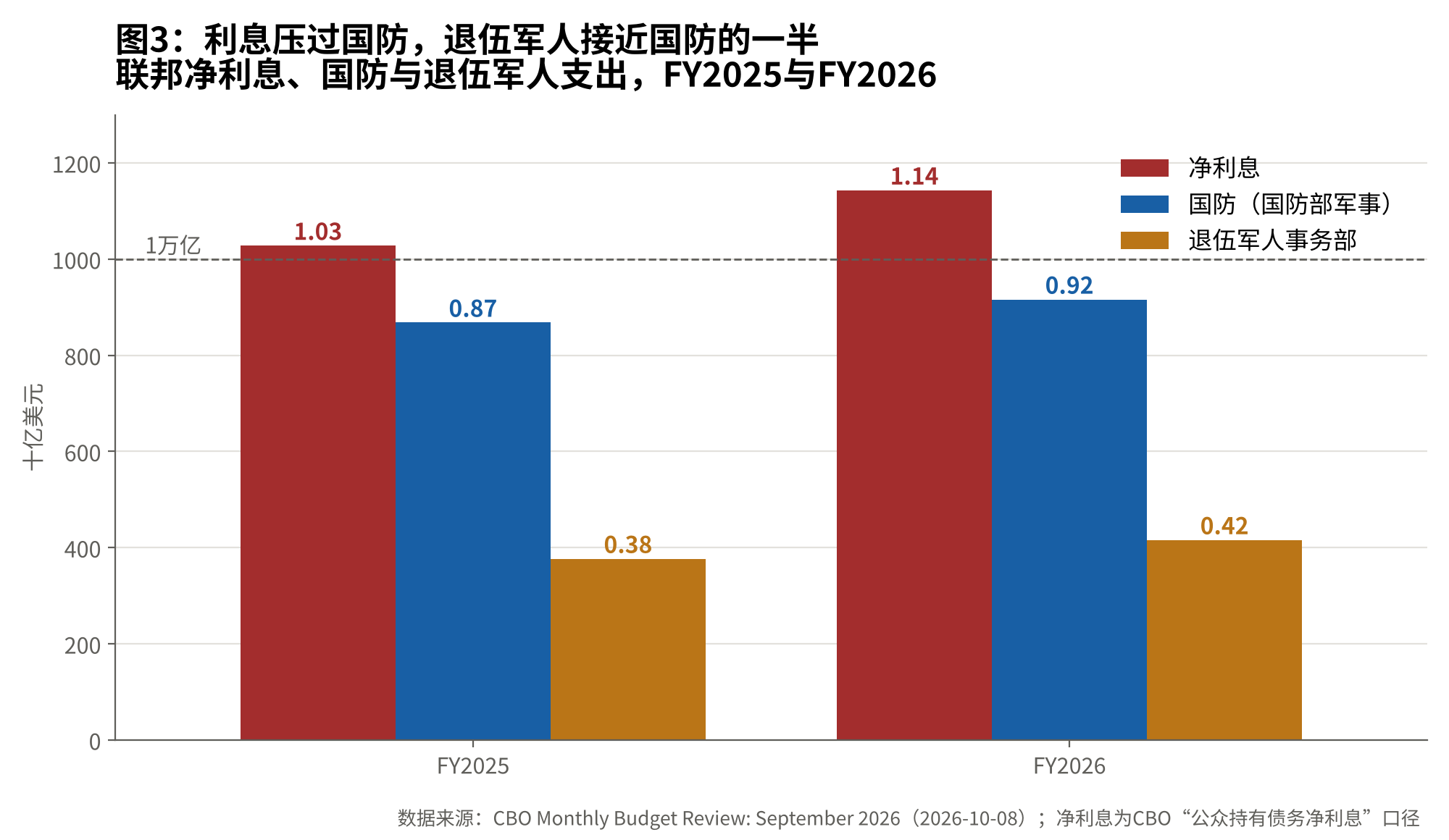
Microsoft is the most typical example. In fiscal year 2026, its pre-tax profit in the U.S. is about $101 billion, up from the previous year's record of $65 billion; at a statutory tax rate of 21%, the federal income tax owed would be about $21.2 billion, but the actual payment is $2.46 billion, resulting in an effective tax rate of 2.4%. Of the $1.87 billion underpaid, about two-thirds comes from accelerated depreciation on investments. In the same year, Microsoft's capital expenditures were $115.9 billion, an 80% increase from the previous year, with two-thirds spent on servers and GPUs, which are the types of assets that can be deducted in one go. The cash flow statement also shows a footprint: deferred income tax for the first nine months was positive $9.5 billion, compared to negative $4.8 billion in the same period last year.
In short, the government is allowing companies to keep the taxes they should have paid to build data centers, with taxes to be collected later. This is a policy design, not a loophole. The $70 billion less collected in corporate income tax and the $188 billion more collected in individual income tax are two sides of the same coin: one side is building AI, the other is distributing the dividends of AI.
The line for tariffs is also worth a glance: a decrease of $22 billion. After the Supreme Court ruled in February that emergency tariffs were illegal, the Treasury began refunding tariffs starting in May, with about $130 billion refunded this fiscal year. This revenue source from tariffs accounts for 3% of total revenue and is still being returned.

Interest Surpassing Defense
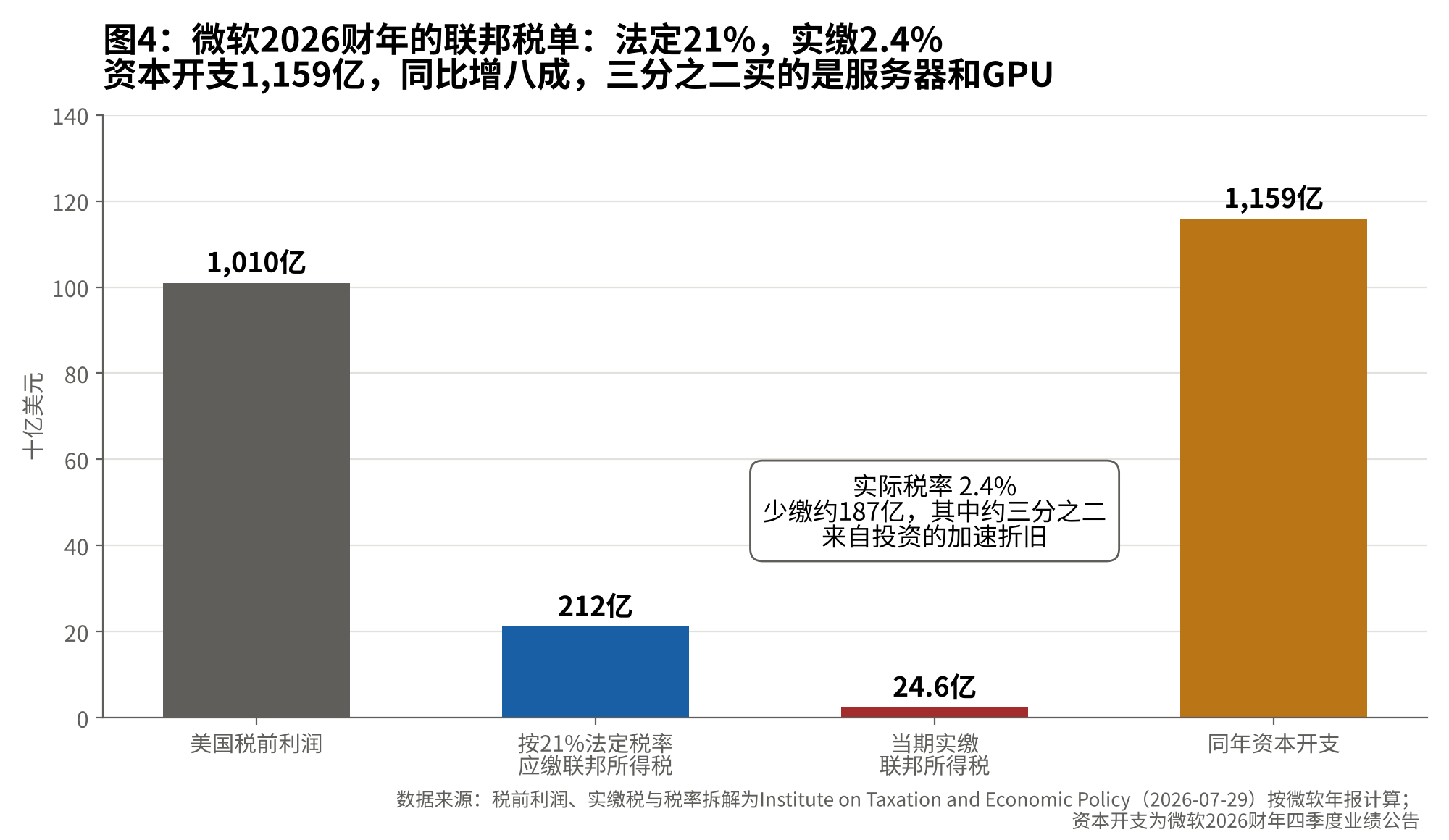
The fastest-growing item on the expenditure side is net interest: rising from $1.03 trillion to $1.14 trillion, an increase of $115 billion, or 11%. The CBO's explanation is also brief: there is more debt, long-term interest rates are higher, and the decline in short-term rates only offsets part of it.
What does $1.14 trillion represent? Defense spending is $916 billion, and interest is $227 billion more than defense, which has now surpassed defense for the third consecutive year; for every $100 spent, $15 goes to interest; interest accounted for 3.3% of GDP last year, higher than the peak of 3.2% in 1991.
More importantly, consider the direction. The total federal debt at the end of this fiscal year is $40.1 trillion, of which $32.4 trillion is held by the public. The average interest rate on existing debt was 3.45% in July, the highest since 2009; the new 10-year issuance is at 5.30%. The batch of bonds issued between 2020 and 2022 with yields below 1.5% is maturing one by one, being replaced by new bonds around 5%. The slope of the interest bill is determined by the interest rate at the moment of refinancing, not by how much is owed.
This is the source of the "opponent being the interest rate." A $2 trillion deficit needs to be filled by issuing debt, which pushes up long-term interest rates, raising interest costs, which in turn increases the deficit. In the October 7 auction for 10-year bonds, indirect buyers took 80%, with the winning bid 1.7 basis points lower than the pre-issue; buyers are still there, but the asking price keeps rising. There is no issue with U.S. credit; the problem is the price. The interest rate paid by the Treasury and the rate at which the stock market discounts earnings are the same rate.
Who Works Hard, Who Gets More
Another line on the expenditure side increased by 10%: the Department of Veterans Affairs, rising from $377 billion to $416 billion. The CBO's explanation is that there are more beneficiaries, and each person is receiving more.
The additional beneficiaries come from the 2022 PACT Act: 23 diseases related to exposure to toxic substances have been designated as presumptive conditions, and veterans no longer need to prove causation. The number of people receiving disability compensation has increased from 5 million in 2020 to nearly 6 million in 2024, accounting for one-third of the 18 million veterans; the average annual compensation has risen from $18,000 to $25,500; the total amount of disability compensation has increased from $91 billion to $153 billion. This fiscal year, the Department of Veterans Affairs processed over 3 million disability claims, setting a record for the second consecutive year, reducing the backlog by 70%, with compensation and benefits exceeding $207 billion. Benefits for 2026 will be adjusted again by 2.8%.
$416 billion is close to half of defense spending. I would like to view this money as another form of defense: those who serve the country earn tangible benefits. This is not mere lip service; it is an investment in national cohesion, with a long payback period and long returns.
Is It Unsustainable?
There are two types of bankruptcy: one is when no one is willing to lend you money, and the other is when you can borrow, but it becomes increasingly expensive. The U.S. is in the second category.
The last time interest accounted for more than 3% of GDP was from the late 1980s to the mid-1990s. The solution then was not through savings: the internet investment boom pushed both productivity and capital gains up, with individual income tax as a percentage of GDP rising from 7.6% in 1992 to 10.2% in 2000, and the federal budget turning to surplus in 1998. The mountain of interest was not removed; it was the denominator and numerator that grew together.
Today's budget is betting on the same outcome. The $70 billion less in corporate taxes has turned into data centers; the $188 billion more in individual taxes is the first dividend of the AI wealth effect. Fiscal policy and the stock market are betting on the same thing: the productivity of AI must be realized before interest starts to snowball.
Both conditions are indispensable. One is that AI must genuinely generate profits, turning today's deferred taxes into profits and tax revenue, which can be seen in financial reports. The second is that interest rates must fall, preventing the refinancing rates from climbing further, which depends on oil prices and the Federal Reserve. Beyond these two conditions, there is one more unexpected factor: with an unemployment rate of 4.2%, the deficit is already at 6.2%; when a recession hits, revenues will drop first, and interest will not wait.
Therefore, "is it unsustainable?" is a misphrased question. The real question is: what will the interest rate be at the moment of refinancing?
Warning of risks does not mean being bearish; a correction is an opportunity to get in.

Next Week, Focus on CPI
The September CPI on Wednesday is expected to be 3.6% overall and 2.5% core; this figure will determine whether interest rates will be raised in December and thus set the starting point for next year's interest bill. On Tuesday and Wednesday, six major banks will report earnings, and on Thursday, TSMC will report; the former will look at credit, while the latter will focus on the numerator of AI. The Treasury's official final accounts will also be released in mid-October, with figures slightly differing from the CBO's preliminary numbers.
Next Week's Outlook
Next week in U.S. stocks, watch both ends of interest rates: one end is what the Treasury has to pay, and the other end is what the stock market has to discount.
Last week's cards: the S&P reached a new closing high for the first time in seven weeks, the 10-year yield at 5.30%, a $2 trillion deficit, and interest exceeding $1 trillion.
Next week's card table: Wednesday's CPI, Tuesday and Wednesday's bank earnings, Thursday's TSMC.
Earnings reports determine the numerator, CPI determines the denominator.
Until interest rates fall, do not chase high positions; until the earnings reports of the AI chain are falsified, do not exit positions. The list and positions are available on the website.
Ultimately, deficits are a political issue, while interest rates are a market issue. Politics can delay, but the market does not wait for anyone.

[For next week’s outlook and specific position details, please visit the website: www.finplusplus.com]
(This article reflects personal opinions and does not constitute investment advice. Data sources: S&P 500 closing prices from Longbridge Market Interface as of October 9; 10-year auction results from the U.S. Treasury; federal revenue, expenditures, deficits, and year-on-year comparisons and explanations from CBO's "Monthly Budget Review: September 2026" (October 8), FY2026 is preliminary; deficit as a percentage of GDP and unemployment rate comparisons from the American Action Forum; Maya MacGuineas's quote from a CRFB press release; the 100% expensing permanent provision interpretation from Phelps Law Firm regarding the 2025 tax cut; Microsoft’s U.S. pre-tax profit, actual federal income tax, and tax rate breakdown from the Institute on Taxation and Economic Policy (July 29) calculated based on Microsoft’s annual report; Microsoft’s capital expenditures and deferred income tax from the company's Q4 fiscal year 2026 earnings announcement and Q3 cash flow statement; tariff refunds from the same CBO report; federal total debt and publicly held debt from the Treasury's Debt to the Penny (September 29), organized by PrimeRates; average interest rate on existing debt from Treasury Fiscal Data (July 31), organized by PrimeRates; historical comparison of interest as a percentage of GDP from Econofact based on CBO data; PACT Act and disability compensation numbers, average compensation, and total amounts from the American Enterprise Institute; this fiscal year's application processing volume, backlog, and total disbursements from the Department of Veterans Affairs September 22 press release; the 2026 benefit adjustment rate from the National Guard Association; personal income tax as a percentage of GDP in the 1990s from OMB historical budget tables; CPI expectations and next week’s schedule from Newsquawk.)
