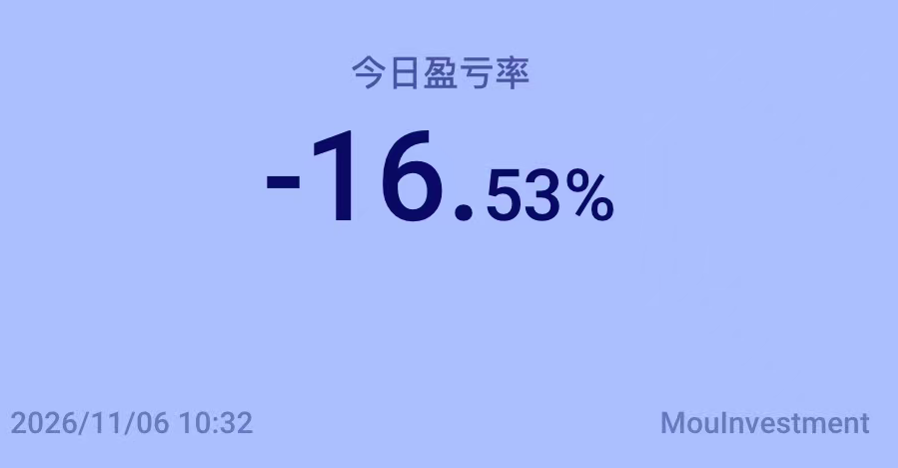
Last Thursday, the S&P 500 fell 4.35%, marking its worst day since the tariff war began in April 2025; the Philadelphia Semiconductor Index dropped 12%, its worst since March 2020; and the Nasdaq entered correction territory. On Friday, there was a rebound, but for the week, the S&P fell 2.7%, the Nasdaq 100 fell 4.9%, and the Philadelphia Semiconductor Index fell 13%. My own account dropped 16.53% on Thursday, the largest single-day decline since the pandemic. What to do after a crash? First, let's discuss why you shouldn't make decisions on the night of a crash, and then we'll talk about which leg to move first if you really have to.
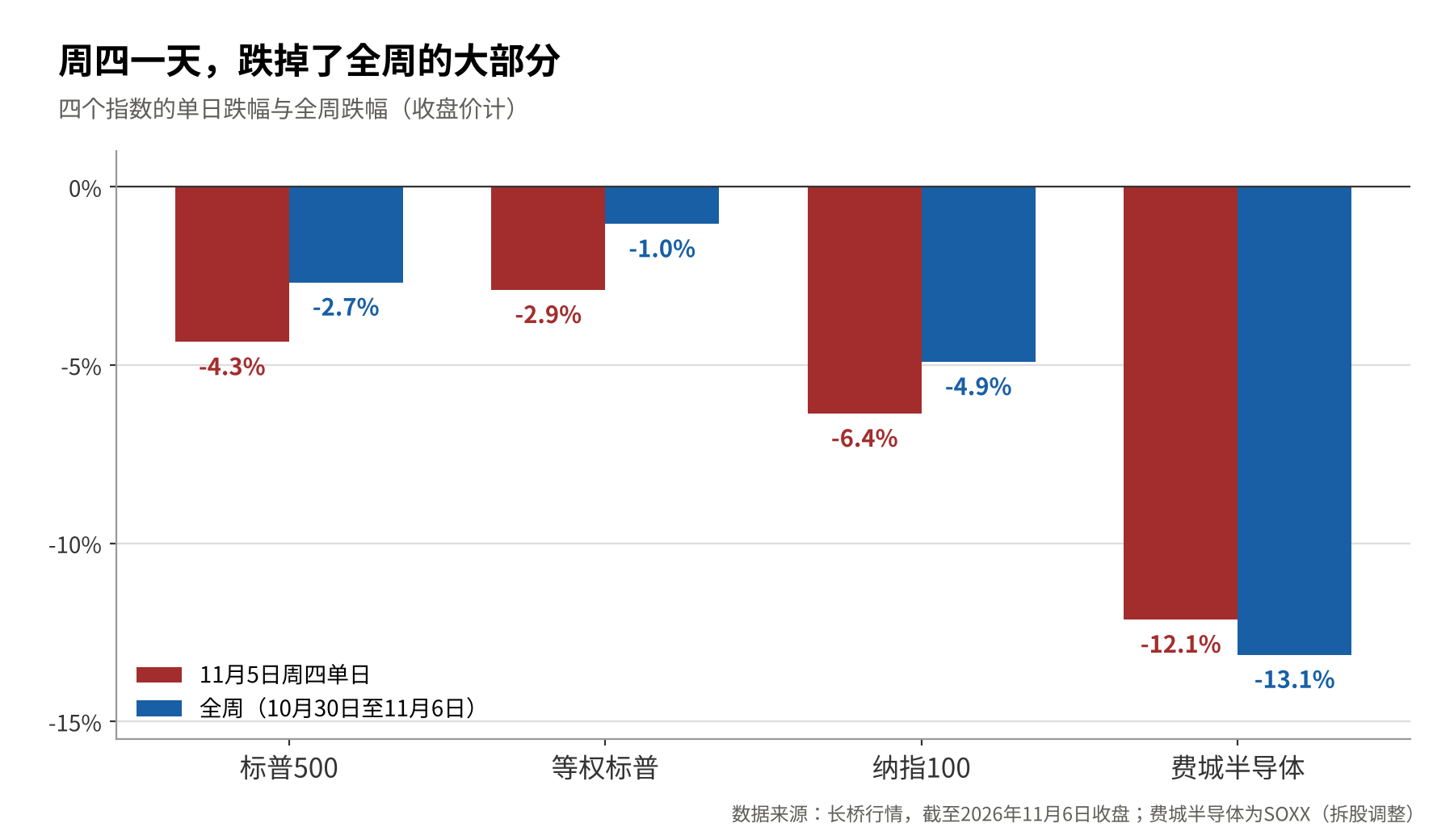
First, check last week's accounts
Last week, I wrote about five signals of misjudgment, and two of them appeared, which means the judgment of "buy the dip" was wrong. A week later, the first signal was half realized: the S&P closed at 7,377 for the week, falling below 7,500; however, the equal-weighted S&P only fell 1% for the week and was still near its highs on Wednesday without breaking down. The VIX peaked at 28.4 but did not reach 30; high-yield bonds remained unchanged; the 10-year yield fell from 4.93% to 4.86%, indicating that money is still flowing into government bonds, not a simultaneous drop in stocks and bonds. There is no public data to verify whether trend-following funds have turned bearish.
According to my own rules, the judgment still stands. But standing doesn't mean it's comfortable: a week ago, when I wrote those five signals, I didn't expect to verify them with an account that dropped 16.53%.
Two voices, one decision
On Thursday night, there were probably two voices in my head. One said: I can't take it anymore, just sell everything; if it drops another day, I'll be crushed. The other said: Don't sell, wait for it to come back up; either add a little to lower the cost basis or use some leverage to quickly make it back.
Having these two voices doesn't mean you're a retail investor; it's a normal human reaction. But when you look at them together, you'll find they are doing the same thing: trying to stop the discomfort. Stopping the discomfort doesn't mean getting the money back. Selling everything to avoid discomfort and adding to positions to bet on a rebound are the same decision, just packaged differently.
The most uncomfortable market conditions are precisely the least suitable for making big decisions. When you feel like "I must make a big decision right now," that decision is often the one you should not make at that moment. Unrealized losses are real, but you still hold the right to "not make a decision."
Next to the worst ten days, stand the best ten days
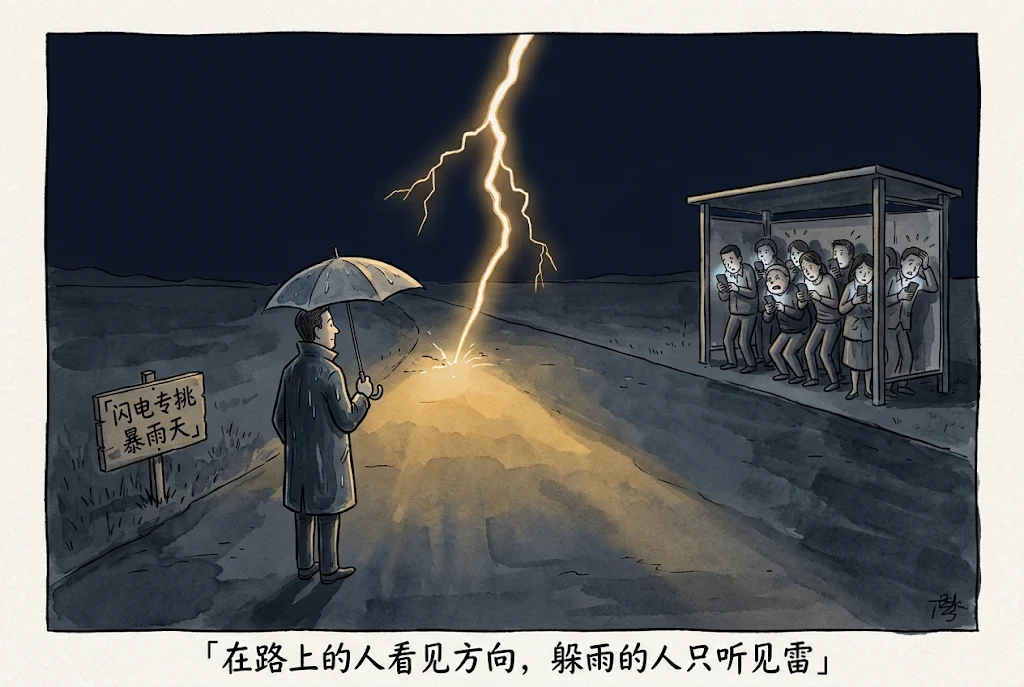
Charles Ellis uses a metaphor in "Winning the Loser's Game" that regular readers of this column are familiar with: investment returns are like lightning; you must be present when the lightning strikes. Over the past twenty years, holding the S&P 500 continuously would turn $10,000 into $70,000; if you missed the best ten days, it would only turn into $32,600, with wealth shrinking by more than half.
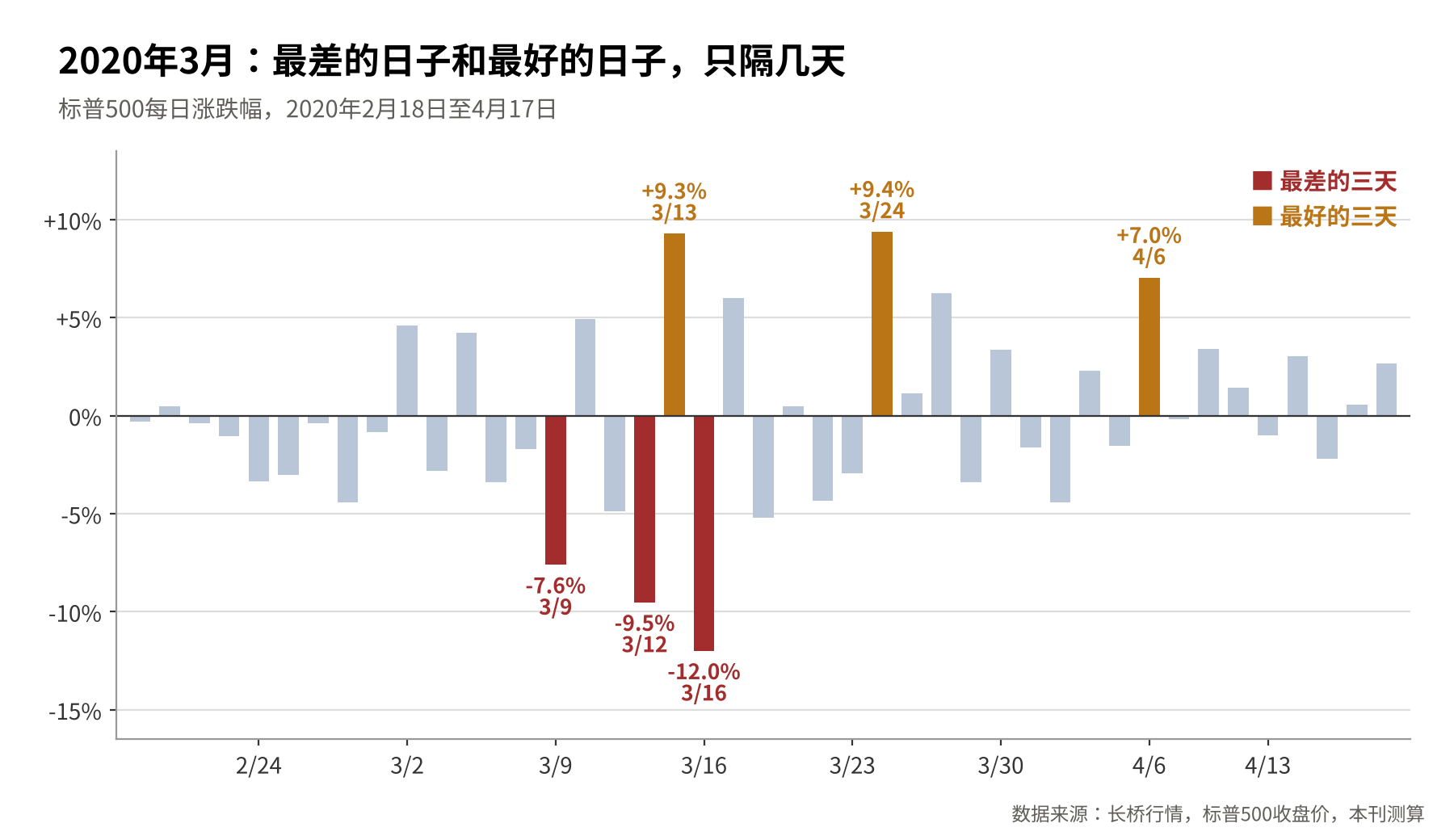
The key is not how few lightning strikes there are, but where the lightning falls. Statistics from JPMorgan show that seven of the best ten trading days occurred within two weeks of the worst ten days. March 2020 is a textbook example: on March 12, it fell 9.5%, and the next day it rose 9.3%; on March 16, it fell 12%, and six trading days later it rose 9.4%. Those who liquidated their positions after the close on March 12 or 16 took all the losses and missed all the gains.
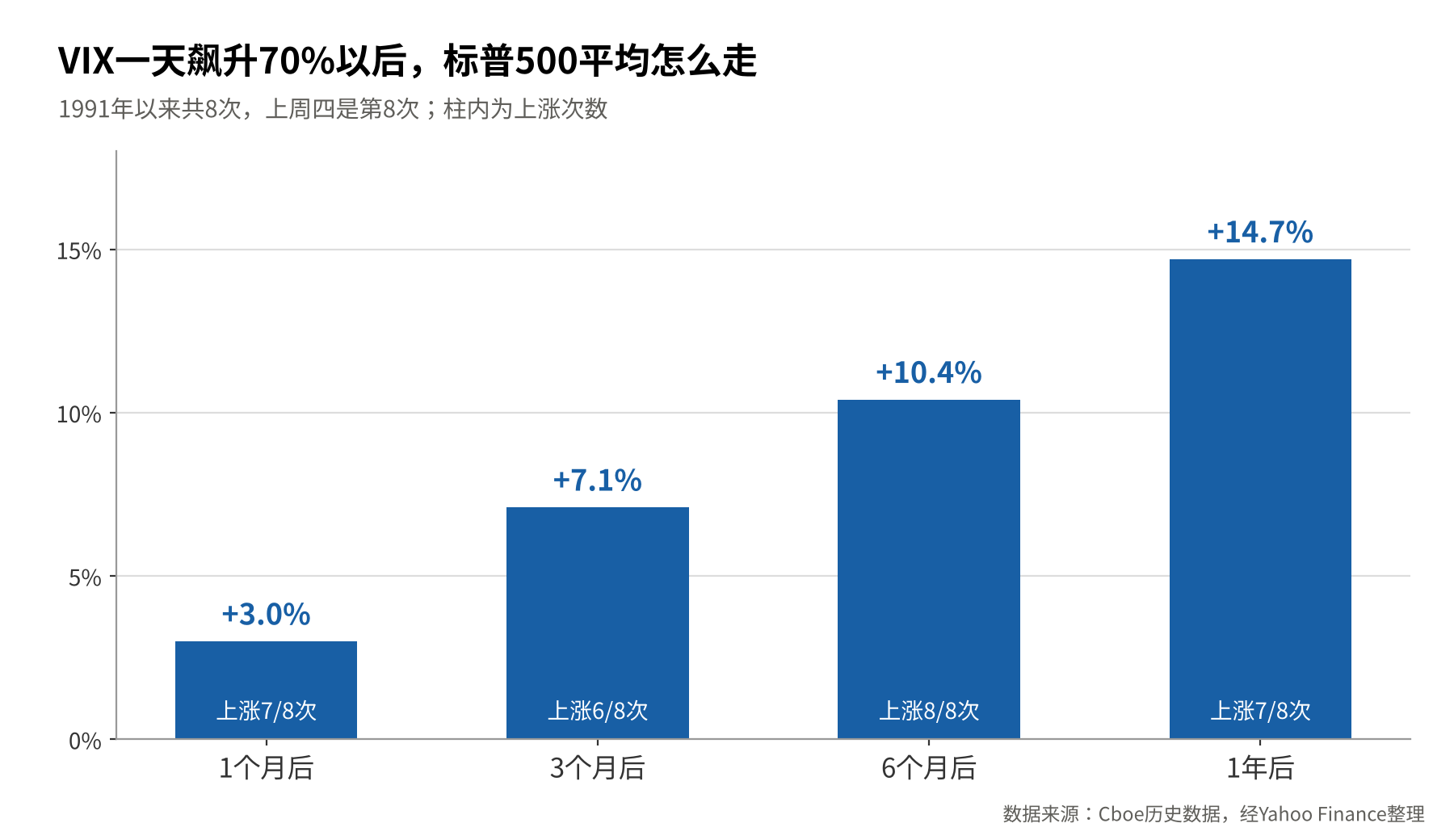
Last Thursday, the Philadelphia Semiconductor Index fell 12%, a day that qualifies as one of the "worst ten days." The VIX soared 70% in one day, a phenomenon that has only occurred eight times since 1991, and the S&P has averaged a gain of 10.4% in the following six months, with all eight instances being positive. This does not guarantee that it will rise next week, but it indicates that lightning does not strike evenly across 252 trading days; it tends to strike on those few days of the most intense storms.
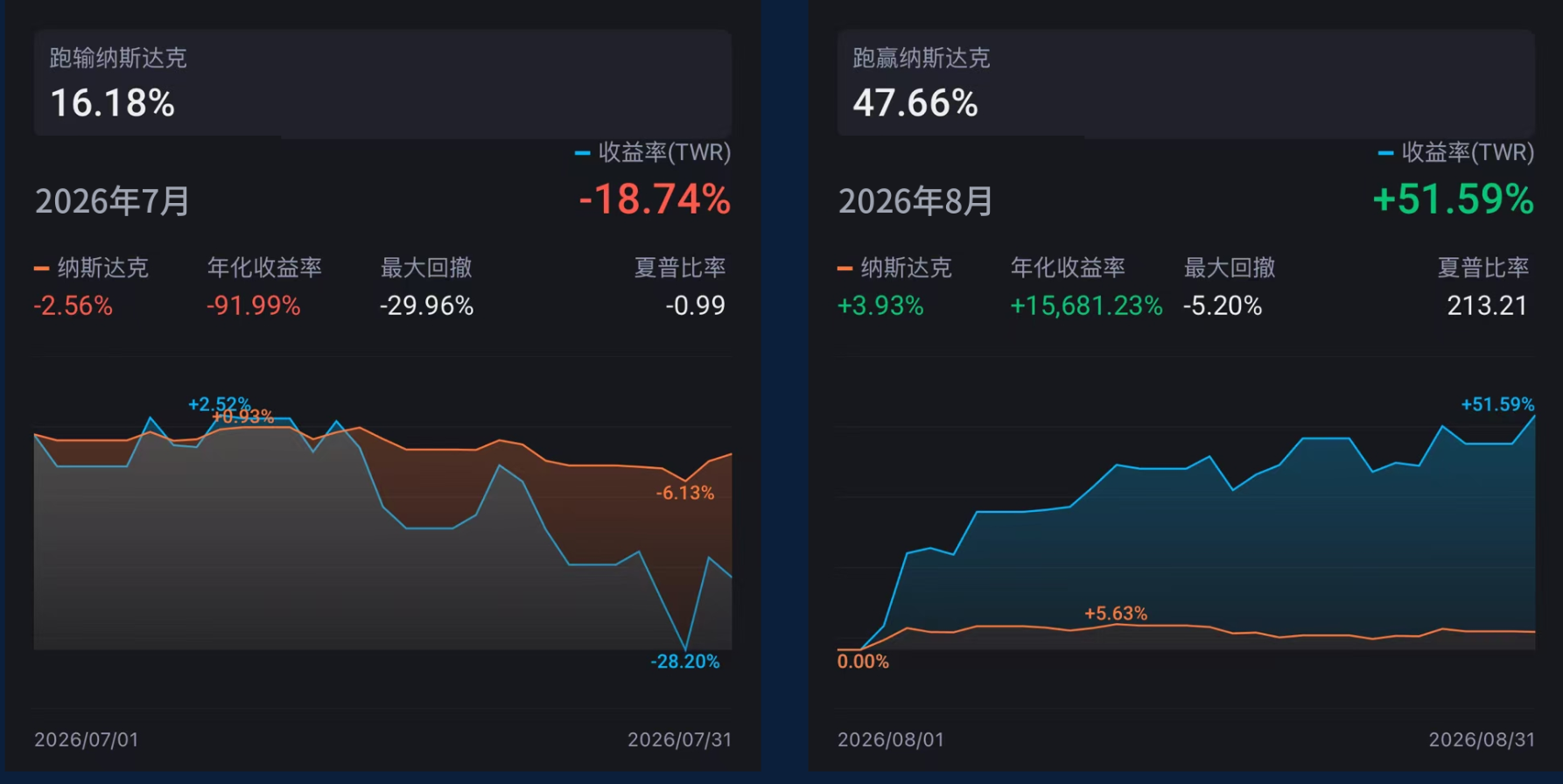
The line on my own account is more direct than the words in the book: in July this year, it fell 18.74%, while the Nasdaq fell 2.56%, with a maximum drawdown of nearly 30% within the month; in August, it rose 51.59%. The two months combined saw a rise of 23%. Those who liquidated their positions at the end of July because they "couldn't take it anymore" missed out on that August line.
No one is forcing you to sell
Who was selling last Thursday? Nomura's McElligott said it was hedge funds locking in profits for the year, "first to strike," and not due to fundamental issues; Vanda reported that retail investors had a net sell of $338 million that day, the largest single-day sell-off since 2020, a "complete surrender." However, on the same day, there was a net inflow of $9.15 billion into the S&P-tracking VOO. In panic, some are leaving, while others are entering.
Institutions face three binding constraints: drawdown discipline, where they must sell when a risk control line is reached; external pressure, such as client redemptions, monthly reports, and peer rankings, where a 10% drop requires an explanation; and rule-driven positions, where volatility targets and risk parity lead to passive reductions when the VIX spikes. These disciplines are advantages in normal times but can be fatal on days of sharp declines: they force institutions to sell on the worst days and then watch the lightning strike from the sidelines.
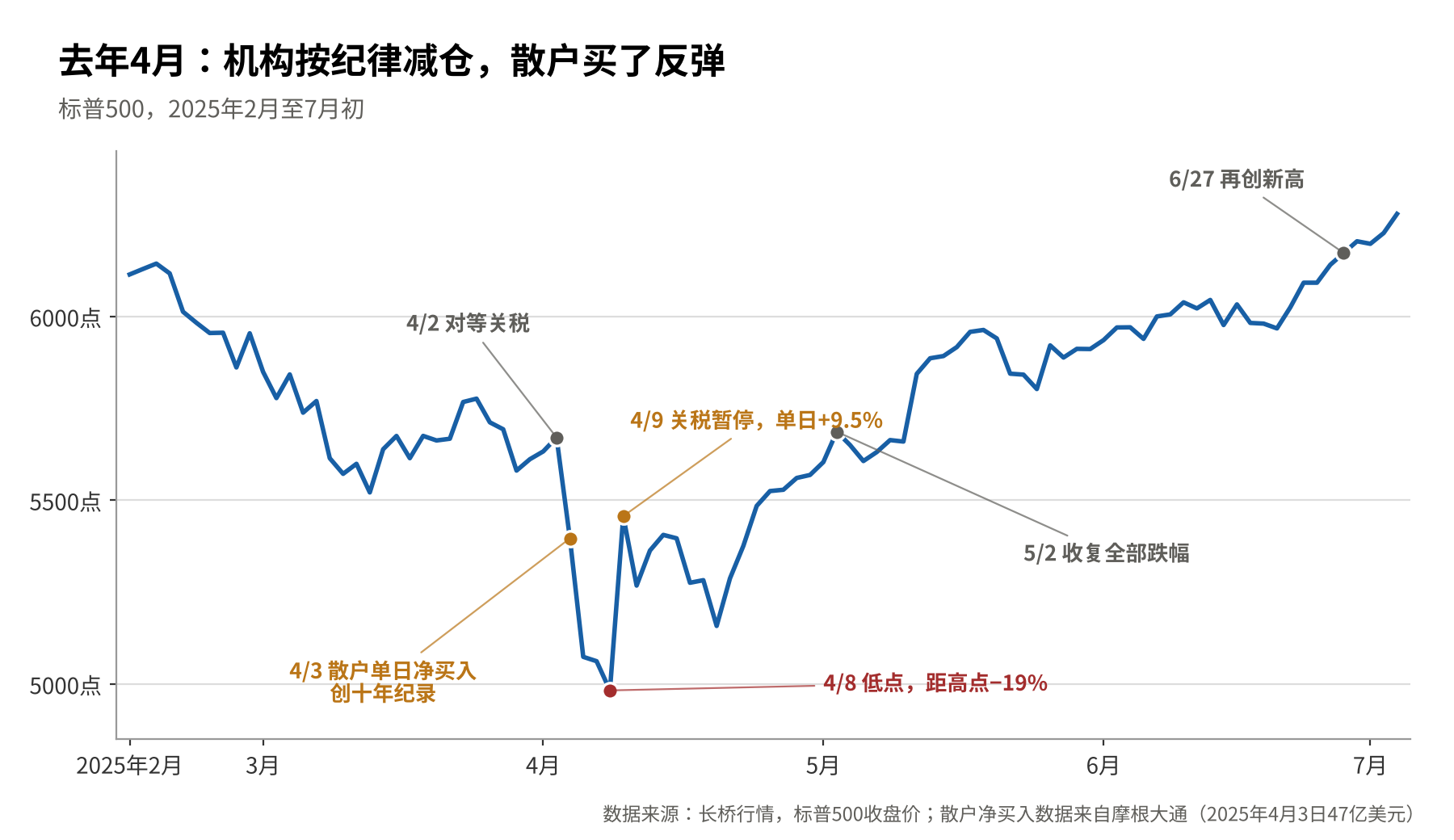
April of last year is a ready example. On April 2, there were reciprocal tariffs, and the market fell 12% in four days; on April 3, retail investors had a net buy of $4.7 billion, setting a ten-year record; on April 9, tariffs were suspended, and the S&P rose 9.5% in one day; by early May, all losses were recovered. The Bank for International Settlements reviewed this later: it was retail investors buying the rebound, not institutions.
The only real and forever existing advantage retail investors have over institutions is that no one is forcing you to sell on the worst days. The only prerequisite is to avoid becoming a forced seller. Leverage, margin, and money needed in the short term can all turn you back into an institution.
If you really need to reduce after a crash: which leg to move first
You usually have three things: the underlying stock, bought Calls, and sold Puts. The order is arranged by "who is most likely to be forced."
The first step is not to look at which stock has fallen the most, but to open your brokerage app's risk control page and find two numbers: risk control status and remaining liquidity. Remaining liquidity is what the brokerage calculates for you as "how much more you can lose before being forcibly liquidated." Dividing it by the market value of your holdings gives you the maximum decline you can still withstand. If it's less than 10%, you're already on the edge of a cliff, and any position using margin should be handled first. Being forced to sell is the worst kind of sale.
The second is the bought Calls, which evaporate the fastest when time value and implied volatility drop. Those that are close to expiration and deeply out of the money are already sunk costs, accept that; those that are further out and where the logic hasn't changed can be kept, but don't add more. Third are the sold Puts backed by cash; it's not urgent, but you need to answer one question: are you willing to take delivery at this price? If you are willing, wait to be assigned; if not, roll them to a later month or to a lower strike price while implied volatility is high, rather than forcibly liquidating at a loss.
The underlying stock should be left for last. The underlying stock is a logical position, not an emotional one. If the logic hasn't changed, don't touch it tonight; if the logic has changed, wait for the emotions to pass before reducing it in an orderly manner.
After a crash, if you really want to add: small steps
Before reducing, ask three questions: Has the logic changed? Is there new information about the company, or is it just the price moving? Is your position too large? Would you be forced to sell if it dropped another 10%? Can you still sleep tomorrow? The part that keeps you awake is what you should reduce. Only after passing all three questions should you discuss adding.
The rule for adding is small steps. Divide the money you plan to add into four or five portions, adding one portion for each decline; each portion should be small enough that "I won't regret it even if it drops another 10%"; the portion you regret is definitely the one that is too large; add positions with cash, not margin. All my transactions from last Thursday to Friday were small orders: dozens of shares of the underlying stock, a few contracts of options, spread over two days. I don't aim to buy at the true bottom; the true bottom can only be known in hindsight. Buying near the bottom while still being present in the market is enough.
Outlook for Next Week
The theme for this week is reconciliation: reconciling the worst-case scenarios, December's interest rates, and Nvidia's earnings report.
The drop last Thursday was one-third due to Texas, one-third due to hedge funds, and one-third due to Qualcomm. Texas Governor-elect Hinojosa's interview on Thursday drew boundaries: all approved data centers can be completed, covering projects until 2027; new approvals must pay taxes, not raise residential electricity prices, and use union labor. Goldman Sachs calculated that the states where the newly elected governor promised to halt or suspend construction account for 45% of the planned data center capacity in the U.S. The worst-case scenario has been bounded, but that doesn't mean the alarm is lifted.
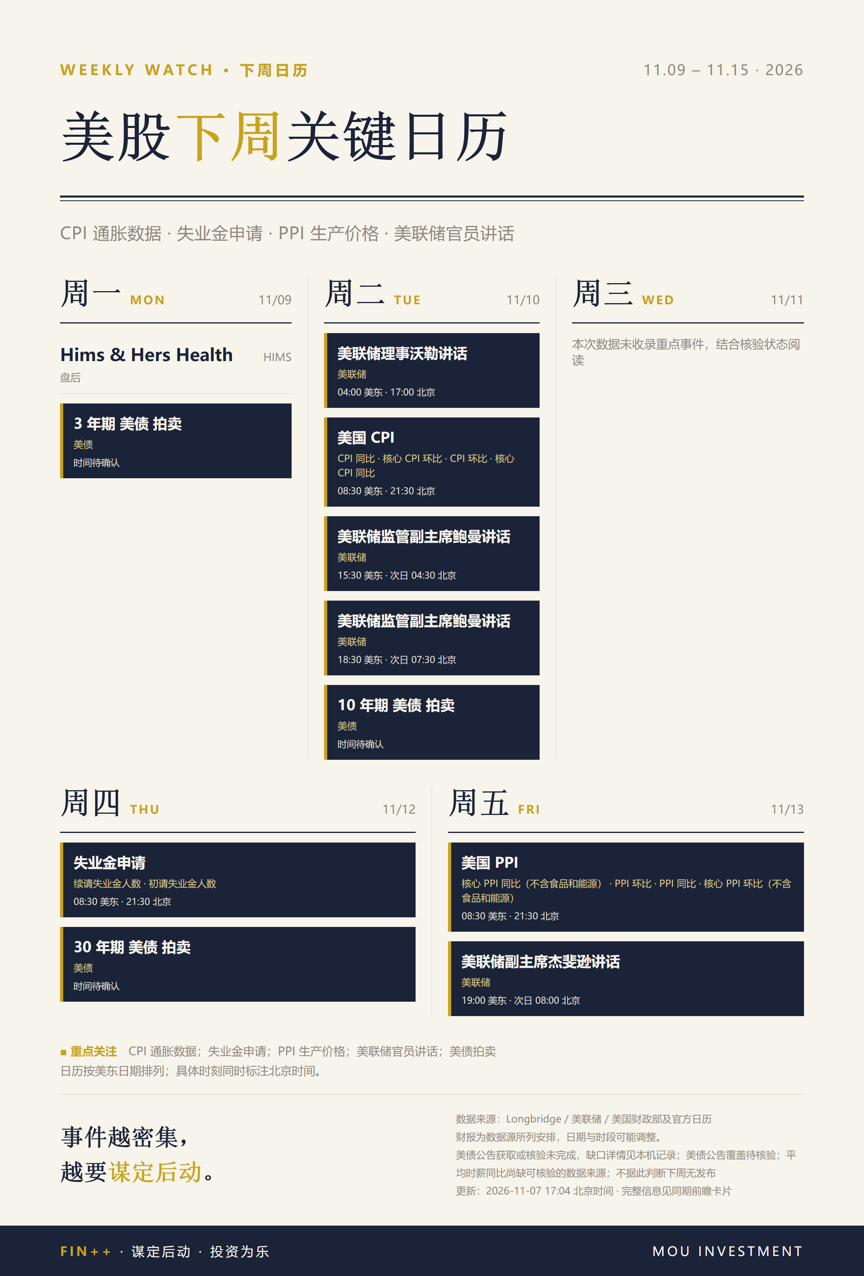
This week's calendar: Tuesday's October CPI and Friday's PPI. Last Friday's October non-farm payrolls showed an increase of 165,000, with expectations of less than 70,000, and the unemployment rate returned to 4.1%, with a 78% probability of a rate hike in December. Following that, on November 18, Nvidia's earnings report will be the final review of this round of adjustments.
The semiconductor sector is facing valuation declines, while non-farm payrolls support interest rates; one is calculating next year's earnings, while the other is calculating the December meeting.
The buying points look for two unchanged factors: the equal-weighted S&P not breaking down and the VIX not exceeding 30. Both are still present. The pace of adding positions is the small steps mentioned above, not a single large move.
The market can crash, but positions must not fall out of order.
[For next week's outlook and specific holding details, please visit the website: www.finplusplus.com\]
(The above is personal opinion and does not constitute investment advice.)
Data source: daily and weekly changes of the S&P 500, Nasdaq 100, equal-weighted S&P, and Philadelphia Semiconductor Index (SOXX, adjusted for stock splits), weekly closing points of the S&P, VIX intraday peaks, daily closing of the S&P from March 2020 to April 2025 (Long Bridge Market, as of November 6, this publication's calculations); the S&P's drop on Thursday was the worst since April 2025, the Philadelphia Semiconductor Index's drop was the worst since March 2020, and the Nasdaq entered correction territory (Yahoo Finance, November 6); 10-year yield at 4.86%, high-yield bond ETF trends, and VOO's single-day net inflow of $9.15 billion (CappNotes, November 6); the wealth value of missing the best ten days (Charles Ellis "Winning the Loser's Game," simulations from 2005 to 2024); seven of the best ten days occurred within two weeks of the worst ten days (JPMorgan Asset Management Guide to the Markets); S&P performance after a 70% single-day spike in the VIX (Cboe historical data, compiled by Yahoo Finance's Brian Sozzi); hedge funds locking in annual profits, "first to strike" (Nomura's Charlie McElligott, via Yahoo Finance); retail investors' net sell of $338 million in a single day, "complete surrender" (Vanda Research's Viraj Patel, via Yahoo Finance); retail investors' net buy of $4.7 billion on April 3, 2025 (JPMorgan); retail investors were the ones buying the rebound in 2025 (Bank for International Settlements' September 2025 quarterly report); content from the Texas governor-elect's interview (CNN, November 5; quoted by Gavin Baker); newly elected governor's promise to halt construction in states accounting for 45% of planned capacity (Goldman Sachs, via Yahoo Finance); October non-farm payrolls and unemployment rate (BLS, November 6); 78% probability of a rate hike in December (Polymarket, via CappNotes); CPI, PPI, and Nvidia earnings schedule (BLS; Nvidia investor relations page); my own account's daily and monthly returns (brokerage app account analysis page, TWR basis).
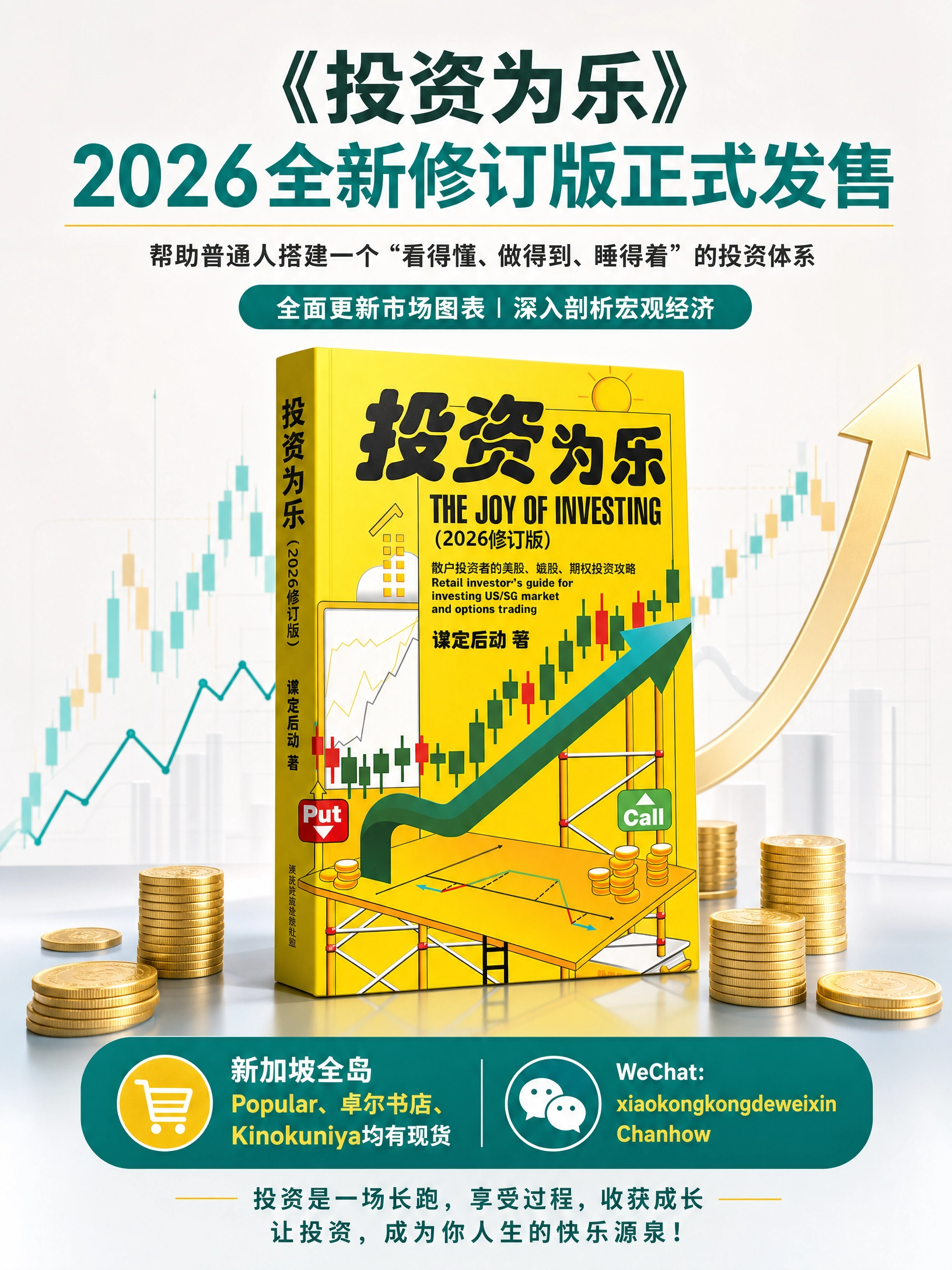
"Investing for Joy" 2026 Revised Edition
The brand-new revised edition of "Investing for Joy" is officially on sale! This book does not promise to make you rich overnight; its core mission is to help ordinary people build an investment system that is "understandable, doable, and sleepable." As a practical guide specifically designed for working investors, it serves more like a mentor and friend, accompanying you in developing investment into a long-term, stable survival skill.
【Wechat Community】
Friends who love investing and options strategies, the WeChat group for the MOU community is full; you can add staff as friends with the note "MOU Community," and I will add you to the group~

【WhatsApp Community】
【Free Group】 Feel free to discuss investment-related topics without worrying about sensitive word reviews.

- 【Mute Group】 MOU teachers will share their pre-market operation thoughts and real-time trading.
- 【Member Investment Group】 Limited to private teaching members, where you can interact with various investment big shots and directly @ MOU teachers for questions.
- 【Member Chat Group】 Limited to private teaching members, for casual chatting and friendship, with no topic restrictions.
Official website finplusplus.com Click the link to register for free membership
- 【MOU Weekly】 and 【MOU Insights】 are updated weekly with analyses of various industry sectors.
- 【Real-time Sharing】 is first published on the official website, where you can search for all historical trades by MOU teachers.
- 【Community】 You can freely initiate discussions, share investment insights, trading strategies, industry insights, and more.
